
Trade Wars & Africa’s Role In A World of Global Kingmakers
1. Strategic Executive Summary: The Continental Shift
The current legislative bottleneck in Brussels is not merely a regional bureaucratic delay; it is a critical precursor to global market volatility. For African executives, monitoring the "Brussels Effect" is no longer optional. As the European Union attempts to balance ideological commitments—such as the 21st Russian sanctions package—against the hard economic realities of its member states and external protectionist pressures from the U.S., the resulting policy shifts create immediate ripples in trade diplomacy. Anticipating these shifts allows African leadership to navigate regulatory transitions before they solidify into restrictive global standards.
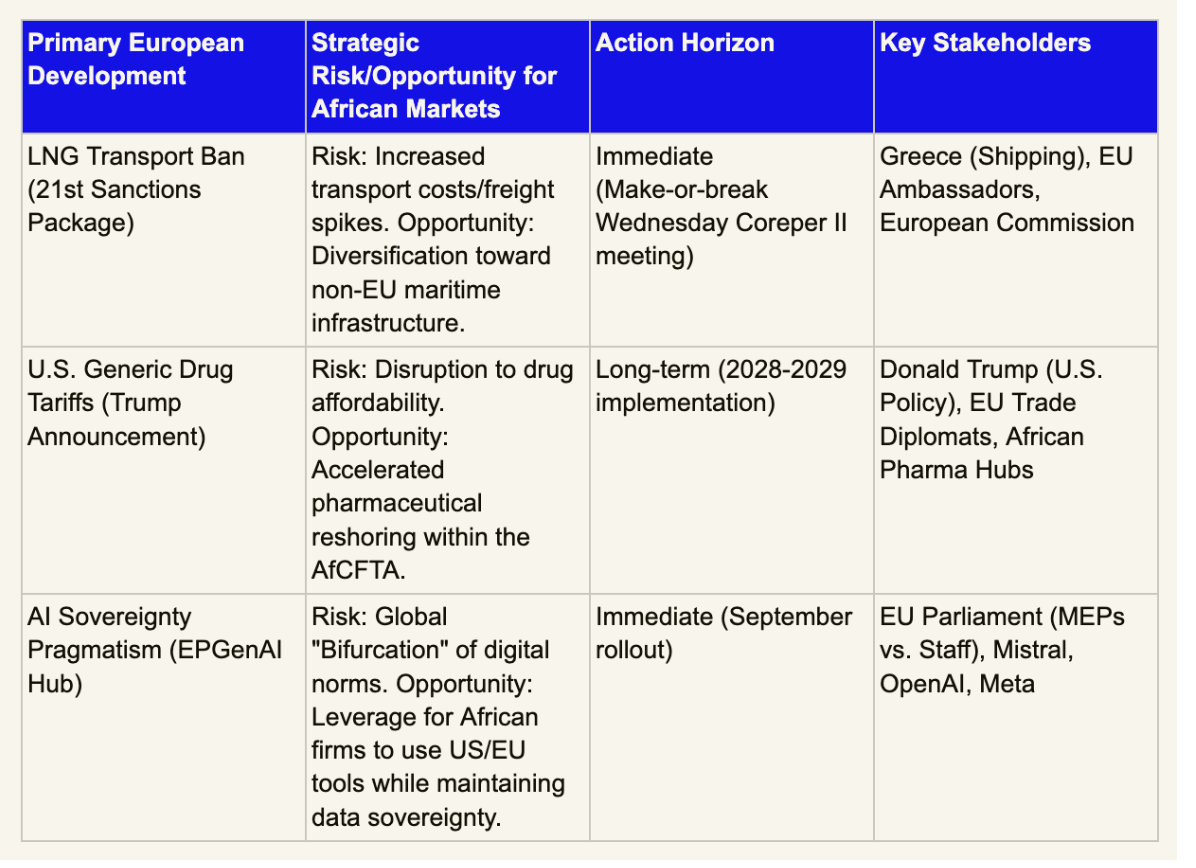
This volatile landscape is currently defined by a collision between energy security and shipping dominance, as evidenced by the high-stakes negotiations regarding the transport of Russian energy.
2. Regulatory & Supply Chain Analysis: The Greek LNG Standoff
The European Commission is currently scrambling to preserve the 21st sanctions package against Russia. This development reveals a widening fissure within the EU: the collision between ideological foreign policy and core economic interests. While the EU seeks to finalize the package before the summer break, internal dissent—most notably from Greece—demonstrates that "key economic interests" are beginning to outweigh collective political maneuvers.
The Hellenic Objection vs. The Austrian Precedent
Athens has emerged as the primary holdout against a proposed ban on the transport of Russian liquefied natural gas (LNG) to third countries. The Greek shipping industry argues that such a ban would be economically devastating and would simply pave the way for third-country, non-EU rivals to replace European shipping infrastructure. To navigate this, the EU is considering "derogations" (exemptions) for Greece. This stands in contrast to Austria, which recently dropped its veto after receiving a Commission proposal regarding Raiffeisen Bank. The "Science" of this standoff suggests that the EU consensus is fracturing, favoring pragmatic member-state concessions over absolute enforcement.
Strategic Intelligence for African Energy Markets
The potential for Greek derogations and the associated volatility in shipping flags directly impacts African energy exporters. As the EU debates these measures in make-or-break Anticis and Coreper II meetings, the following strategic shifts are likely:
Shipping Industry Vulnerabilities: A ban could force a mass "flag-switching" event where transporters exit EU jurisdictions to avoid compliance. This may lead to temporary spikes in freight insurance and charter rates for African LNG exports.
Energy Corridor Shifts: If European shipping companies are sidelined, African exporters must identify and negotiate with emerging non-EU maritime powers to diversify transport reliance away from the Brussels regulatory sphere.This fracturing of energy consensus is symptomatic of a broader trend where practical economic survival is beginning to dismantle the rhetoric of industrial protectionism.
3. Technology & Sovereignty: The AI Integration Dilemma
The European Parliament continues to champion "tech sovereignty," yet its internal operations reveal a deep reliance on American infrastructure. For African regulators and tech founders, this policy-practice gap offers a window into the future of digital governance and the pragmatic retreat of the "Brussels Effect."
The "Guidelines Mess" and the Transparency Gap
The "Science" of the European legislature’s AI adoption is telling: as of June, over 2,100 staffers (20% of the workforce) were using AI daily. However, a significant "guidelines mess" has emerged. While parliamentary staff are required to label work as "AI-assisted," Members of the European Parliament (MEPs) face no such requirement . This creates a transparency gap in "AI-assisted" lawmaking that African regulators should avoid mirroring, as it risks obscuring the origins of critical trade and technical legislation.
The Pragmatic Retreat: EPGenAI Hub
The rollout of the "EPGenAI Hub" in September signals a retreat from absolute tech sovereignty. By providing access to OpenAI, Meta, and Anthropic alongside the French-made Mistral model, the EU is prioritizing functionality over ideological independence.
The "Mirror" Technique: Assessing the Shift
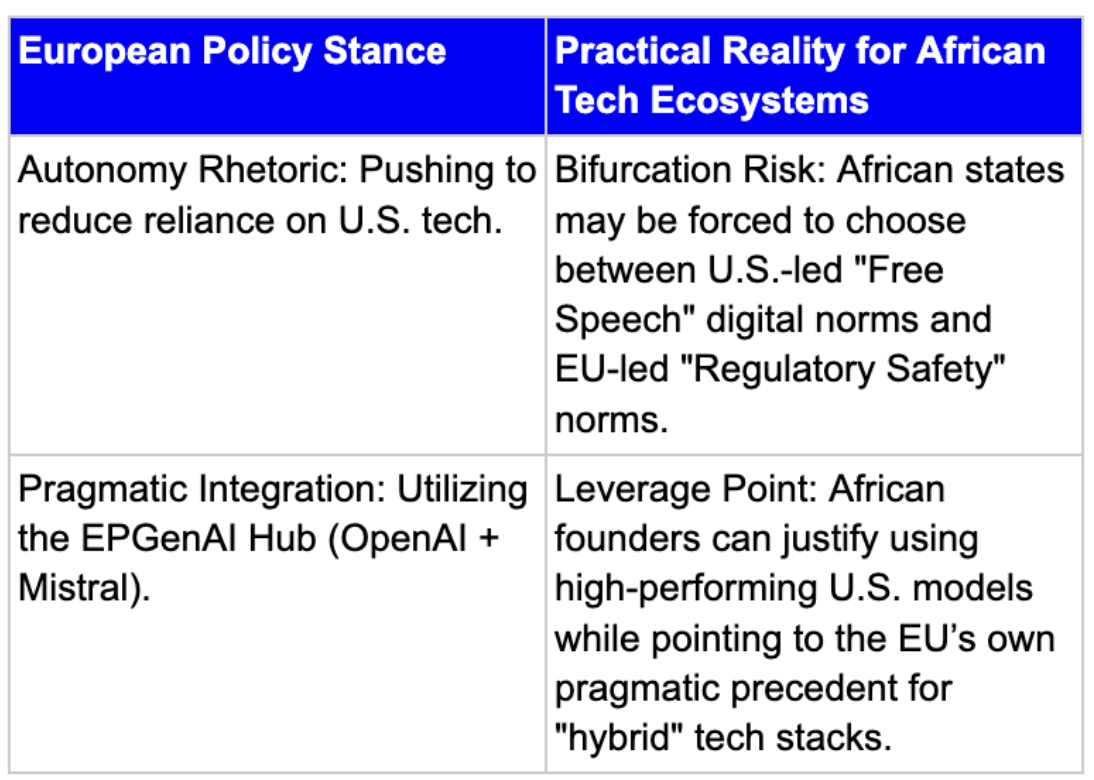
African leadership must leverage this shift when negotiating data privacy, recognizing that the EU’s "sovereignty" requirements are increasingly flexible when economic or administrative efficiency is at stake.
4. Global Trade Alignment: The Rise of Pharma Protectionism
A significant shock to global trade diplomacy arrived not from Brussels, but from the U.S., as Donald Trump announced a plan for 100% tariffs on generic drugs in 2028, rising to 200% in 2029 . While this is currently an "announcement effect" serving as political capital, it signals a massive shift toward reshoring and pharmaceutical protectionism.
The "Brussels Effect" Under Fire
The friction between the U.S. and EU—heightened by U.S.-led "freedom of expression" declarations that lawmakers view as an attack on EU tech regulation—is forcing a pivot in African trade diplomacy. As Western powers focus inward on industrial fund negotiations and scrapping "green rules" to favor competitiveness, Africa must reconsider its reliance on these traditional supply chains.
Strategic Impact Points for Africa
Disrupt Drug Affordability: The 2028-2029 tariff timeline acts as a lead indicator for a sharp increase in the cost of imported generics.
Incentivize Local Manufacturing: This protectionist pivot creates a vacuum for African manufacturing hubs (e.g., Egypt or South Africa) to fill. The African Continental Free Trade Area (AfCFTA) must be utilized as a regulatory shield to foster these hubs.
Pivot Trade Diplomacy: African leaders must move toward securing bilateral agreements that bypass high-tariff zones, ensuring a steady flow of essential medicines through non-Western corridors.African leadership must remain agile, treating these "announcement effects" as lead indicators for supply chain hedging rather than immediate operational triggers.
